

Your logo is a container, not a description
 Daniel Young
15th Apr 2026
Recently, I’ve been thinking about literal logos: marks that visually describe the product or service a business offers. A cog for an engineering firm, a bolt for an electrician, a pair of glasses for an optician.
It’s a natural instinct, and it’s not without merit. But it’s worth asking whether “obvious” and “right” are always the same thing. A literal mark can be easy to remember, easy to recognise, and easy to understand. Look at Apple, probably the best example. Shell. Penguin. Target. Dove. If you’re the only gardener in a small town with a leaf as your logo, there’s no pressing need to reach for something unexpected. Sometimes the market you operate in can work in your favour.
But literal has its limits.
Almost every industry and market is becoming more saturated, not less. In these circumstances, brands need to work harder as a differentiator, to stand out and earn attention. Two coffee shops with a coffee bean as their logo are never going to outdo each other.
And with the rise of generative AI and pseudo-AI platforms that mix and match fonts and symbols, the output they produce is, more often than not, a literal mark. It might be enough to identify a brand, but it’s nowhere near enough to build one with substance and heart. These tools follow the path of least creative resistance, which is exactly why a literal mark won’t always help you stand apart.
So what’s the alternative?
Visual identities, and more particularly logos, are containers. They hold more than just a cold, objective definition of what you offer. They carry feelings, experiences, and the associations customers build with your brand over time, positive or negative.
An abstract logo allows you to infuse it with meaning. Think of Nike’s swoosh and the empowerment it conveys. Think of Starbucks, or even Michelin, with their mascots. Car brands don’t put an image of a car in their logo. That would be absurd, a car badge on a car. An abstract mark gives your brand personality and character, the chance to be genuinely unique. And unique, done well, is just as memorable and recognisable as anything literal.
Look at those car brands’ history and you’ll find many of them made other products long before they settled on cars. A more abstract mark allowed them to diversify and pivot without losing the brand equity they’d built. A literal mark ties you to what you do today; an abstract one can grow with you.
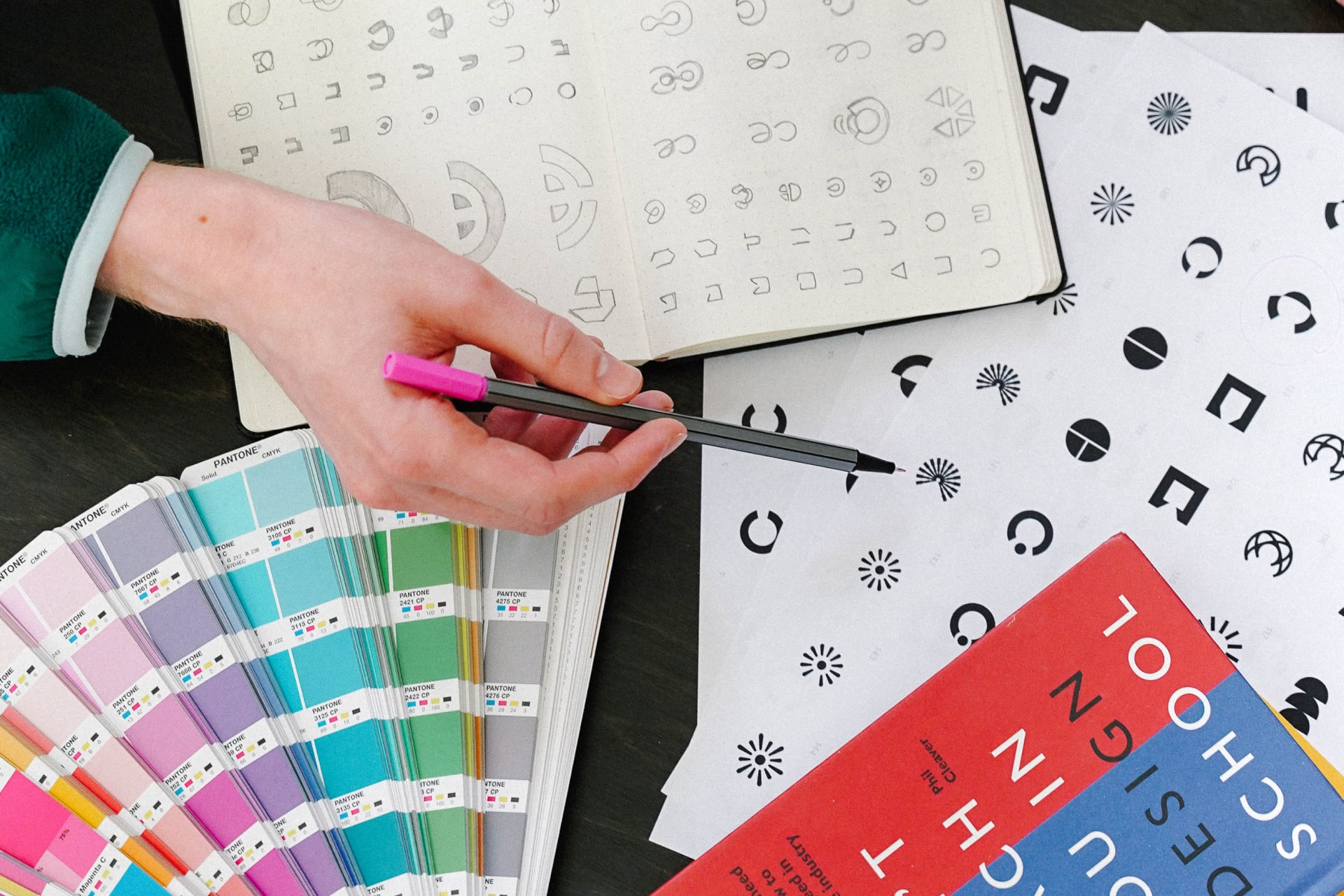
This is where process matters. There’s a common exercise used by brand designers called brand nouns. The first person I know to champion this is Allan Peters, a very talented designer over in the States. It involves the designer and client agreeing on a list of around ten nouns associated with the brand that could be visualised graphically. Some will be literal, some won’t. The value is in pushing beyond the first obvious answer and finding visual metaphors the client might never have considered. I’ve used this myself at DHD. During the refresh of MMN, we identified elements related to the Christian faith and to healthcare, which we could reference, combine, and include in their icon. None of which were a straightforward picture of what they do.

The long game
Our brands are not overnight successes, and we don’t promote them that way. Yes, a rebrand can make stakeholders (internal and external) sit up and pay attention, and feel proud of the new touchpoints. But ultimately, a logo mark accumulates meaning over time. It can feel almost arbitrary at the start, especially for start-ups where the wider brand is also in its infancy. Over time, though, it gains its power through consistent use and association.
Think of the hare and the tortoise. Marketing is for fast moves, but brand building is a steadier, more deliberate approach. Is your sector saturated with similar marks? Do you plan to diversify your offering? Is immediate recognition more important than long-term brand equity? These are the questions we ask at DHD as part of our process, and the answers almost always point toward something more considered than a picture of what you sell.
Push further
I’m not dismissing literal logo marks. They have their time and place. But I’d encourage you to push further. To build a brand that has heart and substance. A personality and character that people can warm to and connect with.
Part of that is trust. It’s the job of brand designers, through research, to find insights and connections, similes and metaphors for your brand, that the business may never have considered. A good designer should be an expert communicator in visual form. Let them be.
Where possible, I’ll always recommend abstract.




Join Our Team
We’re always on the lookout for talented individuals to join our growing team.